A Great Semester

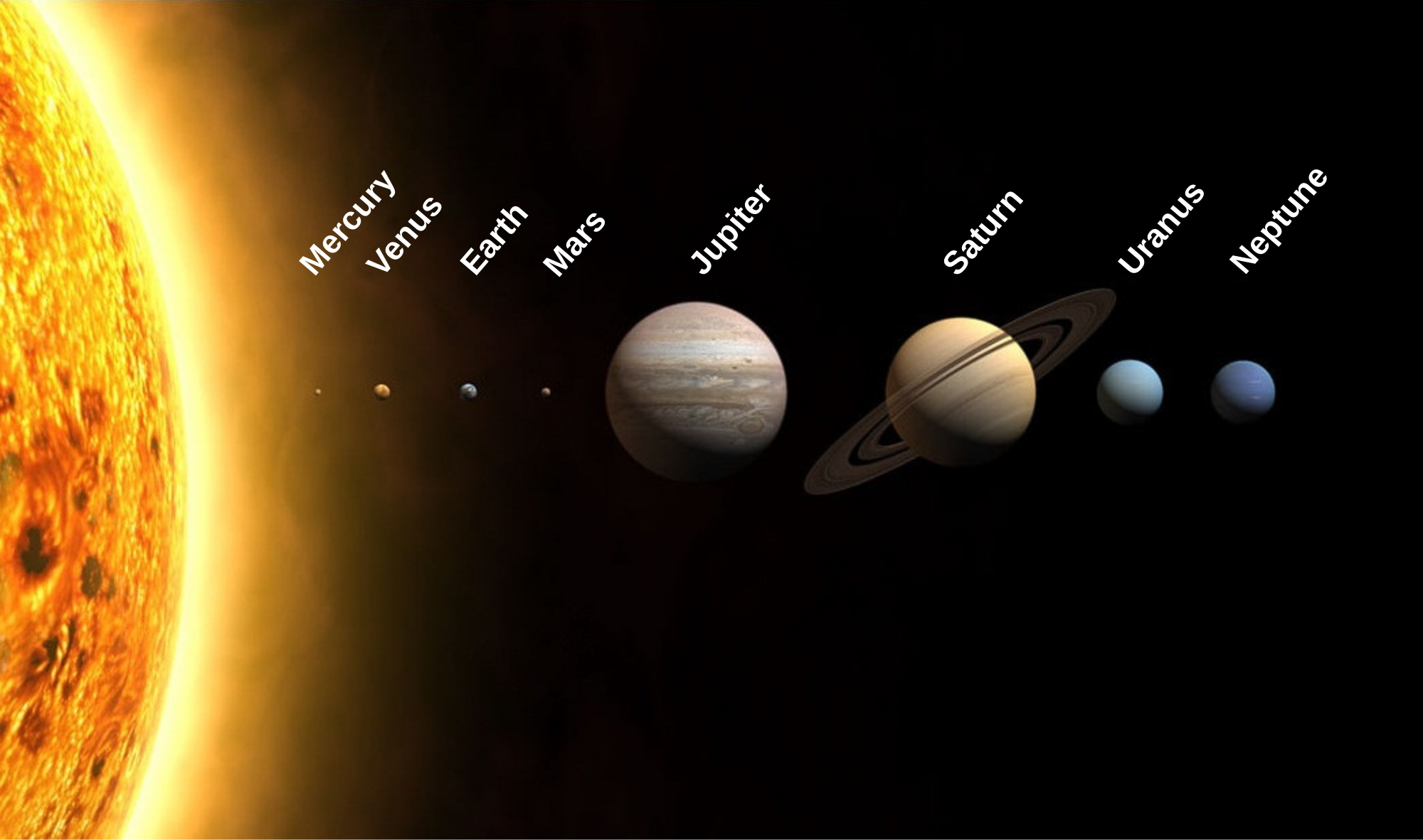
Image result for solar system
Source: Wikipedia – Image of the planets in our solar system (distances are not to scale)

This was a great class, and I’m grateful for all the information I learned. Some concepts were reemphasized since I knew them before taking the course, but I’ve received and retained some new, useful knowledge that I can share with others. I’ve been interested in all things concerning astronomy since I was young, and I take every opportunity I can to learn things about celestial phenomena. Exploring relative sizes of and relative distances between the different things in the solar system during class in addition to researching things that I didn’t even know existed such as the Oort Cloud and different moons was eye opening. Misconceptions of mine, like why the sky is blue during the day and the theory behind the formation of the solar system, have been corrected as well. Many people could benefit from the information presented. I believe that analyzing the cosmic perspective could help a lot of people in a multitude of ways. I knew that Earth was extremely small relative to many other things in the universe, but this class has made me realize just how insignificant we are in the grand scheme of everything.

Resilient Life on Earth Increases Possibility of Extraterrestrial Life

Source: Astrobiology Web – Artist interpretation of an exoplanet orbiting a red dwarf star

Believe it or not, there are organisms on Earth that can survive unimaginable conditions! These beings are called extremophiles, and they’re nothing short of amazing. One example is the tardigrade, which can live in the most extreme heat, cold, dehydration and radiation. The simple fact that these organisms exist give us reason to believe that life elsewhere in the universe exists as well. There are plenty of other rocky exoplanets like earth that experience very extreme temperatures, radiation and x-rays. If these little organisms can survive it on our planet, there shouldn’t be a reason why similar organisms couldn’t survive these conditions elsewhere!

Source: Cosmos – A tardigrade, otherwise known as a water bear

Europa

Europa, a moon of the planet Jupiter, was discovered in 1610 by Galileo Galilei and Simon Marius. It is a little smaller than Earth’s moon, and it has one of the smoothest surfaces in the solar system. The surface is made up of water ice with long, linear lines fracturing it. The low number of craters and cracks suggest that the surface is no more than 40 million to 90 million years old. There is the possibility that Europa has an iron core and a frozen ocean beneath the crust. No concrete evidence for this ocean exists yet, but previous missions have made it possible to strongly suggest its existence. Tides, which occur because of Jupiter’s stronger gravity on the near side Europa, have been observed, and if the ocean exists these tides could create hydrothermal activity that could make the ocean fit for living things.

Europa
Source: NASA – The trailing hemisphere of Europa. The right image is an enhanced false-color composite.

It takes about 3.5 Earth days for Europa to complete a rotation of its axis. This is also the amount of time it takes for Europa to elliptically orbit Jupiter. The average orbit velocity of this moon is about 46% of Earth’s. The surface temperature is about 110 K on average at the equator and 50 K at the poles. These low temperatures keep the crust solid. Europa’s atmosphere is made up of mostly oxygen as well, however it is very thin. Galileo, the spacecraft, confirmed the presence of an atmosphere when it discovered a weak atmospheric layer of charged particles in 1997. The oxygen in Europa’s atmosphere did not originate there either. Ultraviolet radiation and charged particles smash into Europa’s surface, which splits the water molecules into oxygen and hydrogen atoms that are absorbed into the atmosphere. This ongoing process is referred to as radiolysis.

Image result for europa clipper
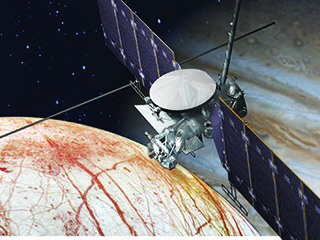
Source: NASA – Artist conception of Europa Clipper in orbit

NASA’s Europa Clipper plans to launch in 2023, and will orbit Jupiter in order to carry out flybys of the moon and investigate its structure and contents. Learn more about the mission here!

Expanding a Trillion Dollar Industry

Many are familiar with mining on Earth to obtain resources that we use for all sorts of things on the planet. What many don’t know is that this process can be, and most likely will be, expanded beyond the planet. Asteroids contain many of the resources found on Earth since they are basically leftover material from the Solar System’s formation. Asteroid mining is an idea that is currently being explored by scientists and engineers in order to exploit the resources that can be found on these asteroids. Their size and type can vary, and the amount of resources that can be obtained is dependent upon these factors as well as their accessibility.

Image result for asteroid mining
Source: SYFY – Artist conception of asteroid mining

It will take a lot of money (billions) to even begin attempting this project. However, asteroid mining has the potential to be very lucrative as it is estimated that a relatively small asteroid can contain over $20 billion in just platinum. Since many asteroids cross Earth’s orbit during their journey through the Solar System and around the sun, they can be approached using a relatively low amount of fuel from our planet’s orbit. The first missions are loosely projected to be sometime during the 2020s. Planetary Resources is a company that “aims to be the leading provider of resources for people and products in space through its goal of identifying, extracting, and refining resources from near-Earth asteroids” and more information about their plans can be found on their website here.

Understanding Our Sun

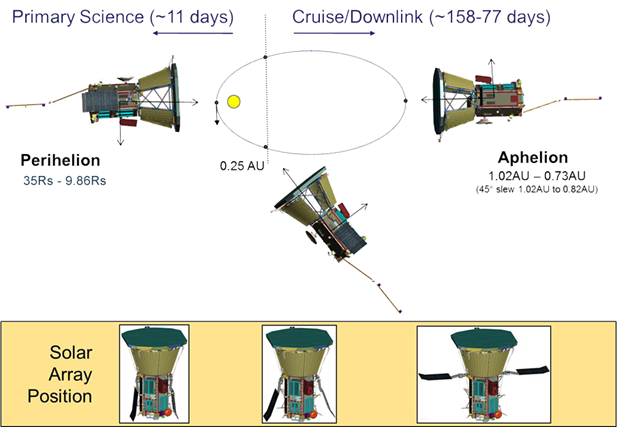
On August 12, 2018 the Parker Solar Probe was launched. The mission of this probe is to investigate activity in the Sun’s corona in order to provide us with information that can help us understand more about the star and Earth’s connection to it. Analyzing the data being sent back will allow scientists to potentially forecast different space-weather events, in addition to studying what makes the corona hotter than the surface, and the effects this has on Earth and the other planets of our Solar System.

Source: NASA – Parker Solar Probe Concept of Operations

The spacecraft will travel closer to the Sun than any other spacecraft ever has, and it was made to tolerate the extreme conditions, such as heat and radiation, that it will face during its journey. The probe has already completed its first orbit as of January 19, 2019, and is expected to orbit the Sun 23 more times. The data that has already been sent back has given scientists clues about things different phenomena that they would’ve never expected. Predictions are great, but it’s always better to get information straight from the source.


Source: NASA – Trajectory of the Parker Solar Probe

You can find more information about the probe and the mission here!

Porous Martian Mountain!

Like many things in space, the planet Mars has been a point of interest for many since its discovery long ago. Some even believe that it could one day be a place for the human race to relocate. Curiosity, a rover launched back in November of 2011, has been exploring the surface of mars for about 6 years now. Originally its purpose was to establish if microbes could be supported by the environmental conditions present on Mars. More recently, however, gravity measurements on Aeolis Mons, a Martian mountain located in the Gale crater, have been taken by Curiosity in order to come closer to determining how the mountain was formed.

By NASA. Source: The New York Times – Curiosity rover in the Gale crater
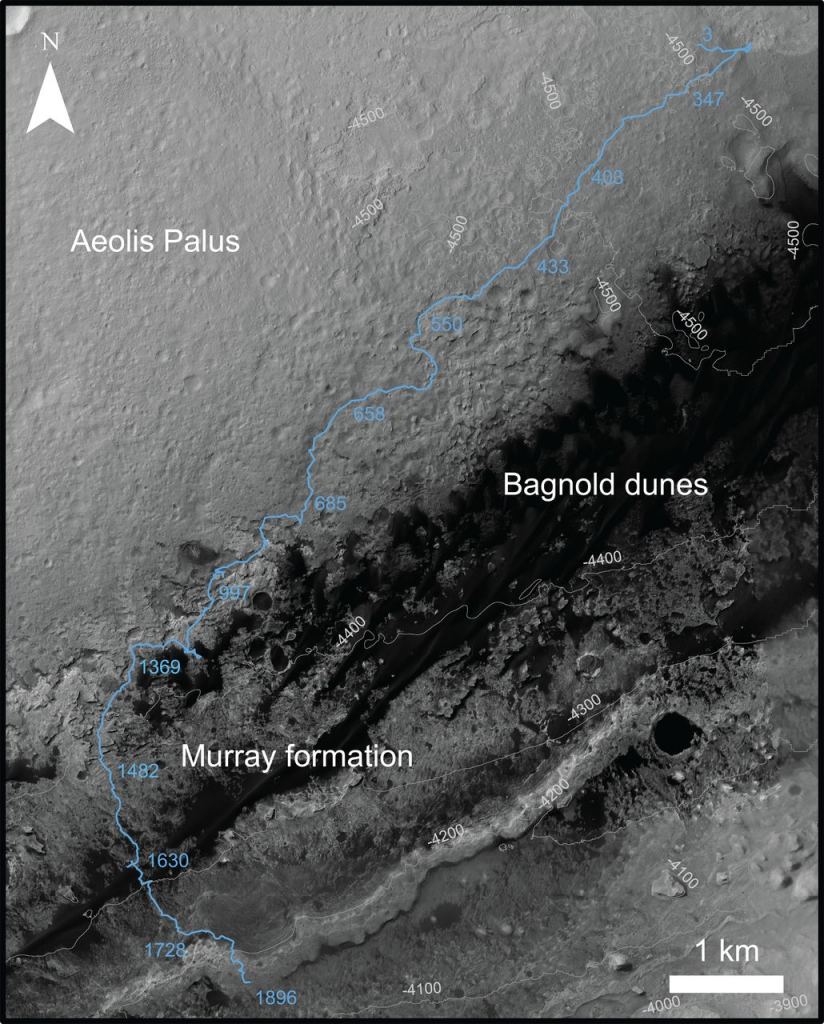
This image was captured by NASA's Mars Reconnaissance Orbiter. It shows part of Curiosity's path, past the Bagnold dunes in Gale Crater, through the Murray formation at the base of Mt. Sharp, and up the bottom slope of Mt. Sharp. Image Credit: NASA/JPL-Caltech.
By NASA. Source: Universe Today – Shows part of Curiosity’s Path through the Gale crater and up the bottom slope of Aeolis Mons

Gravimetry is the measurement changes in gravitational fields. Realizing that the accelerometers on Curiosity, originally intended to track the rover’s tilt, could also be used to calculate the change in the gravitational field of the Martian mountain was the catalyst for this new mission. As Curiosity traversed Aeolis Mons, the gravimetric measurements suggested that the mountain rock is porous. This data implies that the Gale crater actually was not filled to the brim with sediment, the previous Aeolis Mons formation theory, since porous rocks could not have upheld all the weight without compression. The findings do support previous theories in some aspect though. It seems that the mountain rock was just buried by either less dense material or not much material. Even so, this still adds to the mystery of the mountains formation. More questions have emerged because of this new research, but a valuable piece of the puzzle has been added.

More can be found on the research here!

Historical Astronomers in Context

Galileo

Galileo Galilei (February 15, 1564 – January 8, 1642) made the telescope famous by improving upon spyglasses in order to increase their magnification and observe phenomena in space. He discovered that neither the sun nor the moon are smooth, observed the phases of Venus, and discovered the 4 biggest moons of Jupiter. Considering that in his lifetime Copernican Heliocentrism was accepted, Galileo’s discoveries of Venus’ phases and Jupiter’s moons were major evidence against the Copernican theory. He was convicted of heresy after publishing his work discrediting the theory and sentenced to house arrest for the rest of his life.

Other Events During his Lifetime

The French wars of religion took place between 1562 and 1598. This was a period of multiple civil wars and treaties between Roman Catholics and Huguenots (French Protestants). Meditations on First Philosophy by René Descartes was first published in 1641. This book was Descartes’ attempt to get rid of all beliefs that he could not be absolutely certain of, and then tries to objectively determine what actually can be known for sure. It’s a work widely renowned among philosophers today.

Another Famous Figure in Galileo’s Lifetime

William Shakespeare (April 26, 1564 – April 23, 1616), well known for Romeo and Juliet, was an amazing writer that created surprisingly relatable content that has withstood the test of time. He was born shortly after Galileo but died way earlier. Interestingly enough, he is connected to astronomy as well. The majority of Uranus’ moons are named after characters from Shakespeare’s works.

Reflection

I always enjoy revisiting interesting historical events and discoveries. I think it’s important to understand where things and ideas come from and the impact they had at the time of their creation. I knew most of this information previously, but I always seem to find some new piece of knowledge by reviewing this area of history. So many things were going on. Some of the biggest discoveries and achievements of astronomy, literature and philosophy took place in the same period. It’s amazing to think that these great minds in human history broke so much ground while living at the same time independent of one another. Imagine if they had the technology we have today to instantaneously spread the word of their accomplishments!

Life on the Moon!!…Kinda

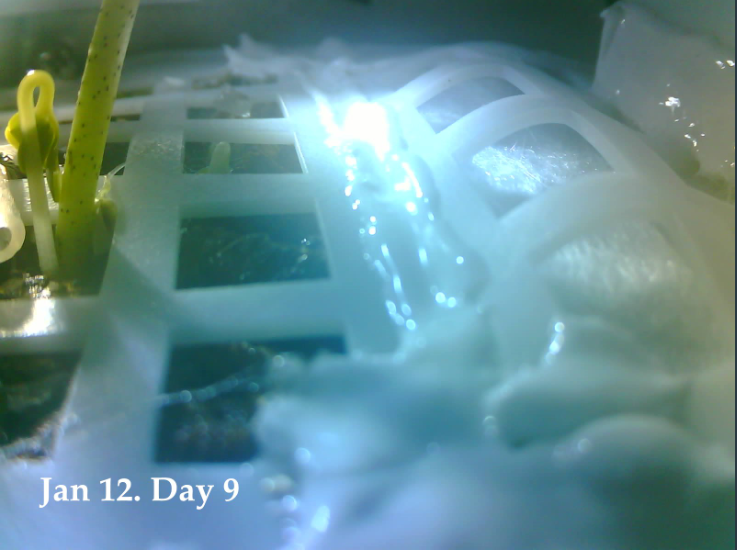
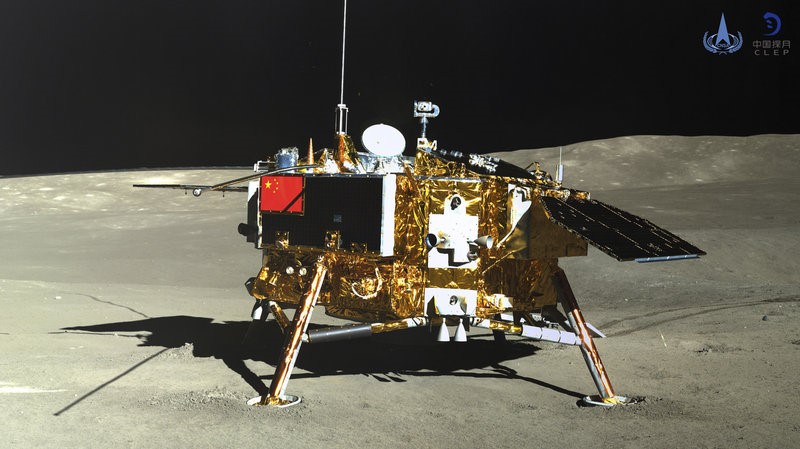
Does extraterrestrial life exist? Can living things even survive on another world? These are questions that have been asked for a long time and continue to be asked today. China tried to address the latter recently by experimenting with cotton seeds along with 6 other organisms, including potato seeds and fruit fly eggs, on their Chang’e 4 lander. The seeds were placed in a protective environment designed to keep them alive and shield them from the extreme conditions on the moon. When the seeds started to sprout, many were ecstatic. However, not even two weeks later the plants fell victim to the frigid temperatures present in the immediate lunar environment.

By China National Space Administration. Source: China Xinhua News – Cotton plant sprouting in its container on the moon

One day on the moon lasts approximately 29.5 days on Earth, so both day and night on the moon take place for about 2 weeks on Earth. This is why the plants could not survive for more than 2 weeks. Solar power was used for the experiment, and when the sunlight ran out after nighttime began there was no way to power the resources needed to sustain the plants. Even though there was no definite conclusion reached, it’s interesting to see some sort of proof that living things can potentially be transported, with the right biological and supportive resources, to another world and survive (even if for a short amount of time). Nonetheless, the rapid sprouting of the seeds definitely provided noticeable results that will be studied more. Updates about the lander’s findings will be posted on China Xinhua News’ twitter if you want to know more! Also check out SpaceTV for more news and some live streams regarding the Chang’e 4 lander.

By CNSA. Source: NPR – Chang’e 4 lander

Intro Post

I’m excited for this course. I’ve always been interested about everything extraterrestrial! Below is a picture of a new member presentation and my unveiling as a member of Alpha Phi Alpha Fraternity, Inc. The presentation was supposed to take place outside under the starry night sky, but the pouring rain had different plans for us…

Photographed by my brother in the Sarratt Student Center Cinema.
My fraternal reveal to the world 2 years ago.

Photographed by my brother outside of Kirkland Hall.