A Great Semester

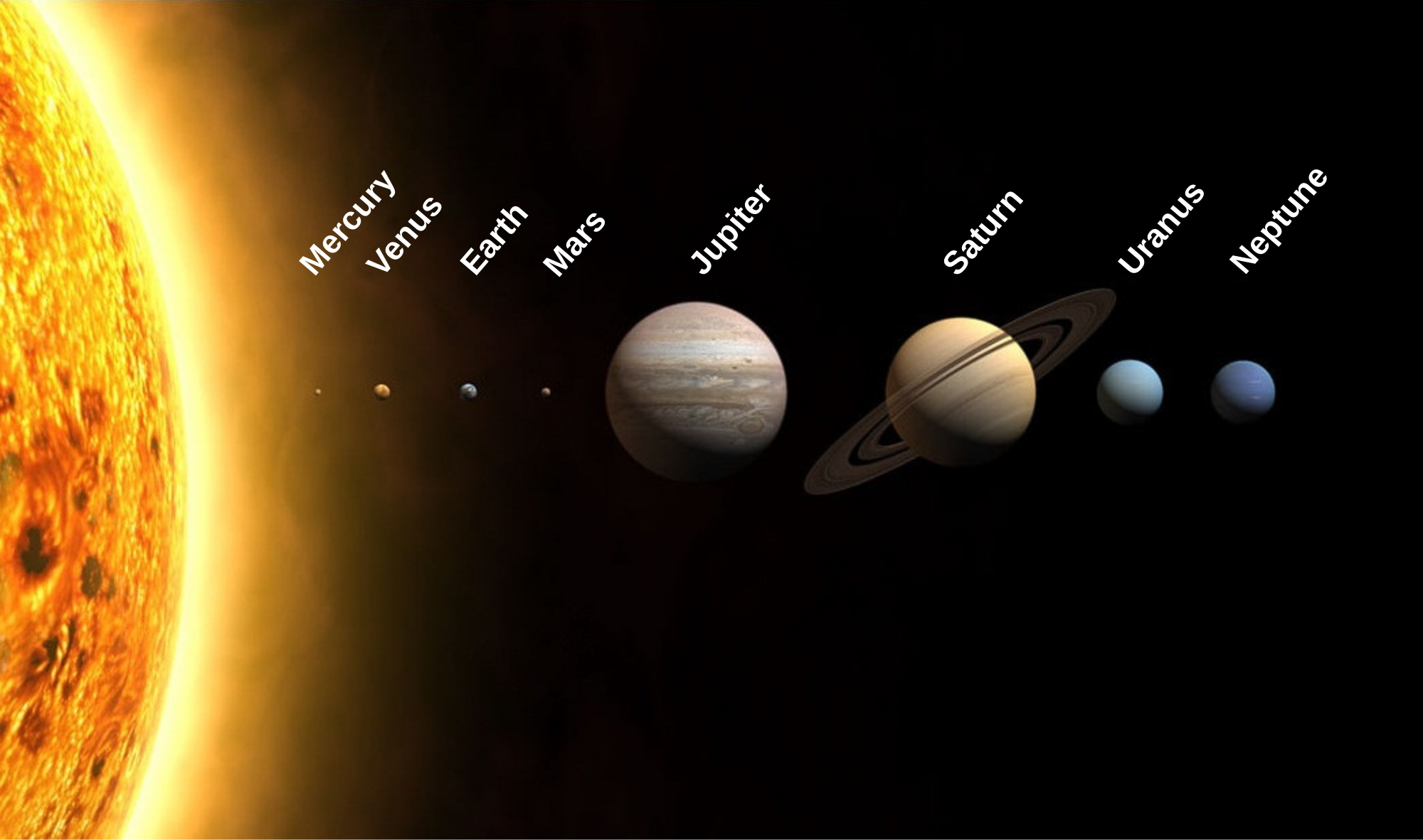
Image result for solar system
Source: Wikipedia – Image of the planets in our solar system (distances are not to scale)

This was a great class, and I’m grateful for all the information I learned. Some concepts were reemphasized since I knew them before taking the course, but I’ve received and retained some new, useful knowledge that I can share with others. I’ve been interested in all things concerning astronomy since I was young, and I take every opportunity I can to learn things about celestial phenomena. Exploring relative sizes of and relative distances between the different things in the solar system during class in addition to researching things that I didn’t even know existed such as the Oort Cloud and different moons was eye opening. Misconceptions of mine, like why the sky is blue during the day and the theory behind the formation of the solar system, have been corrected as well. Many people could benefit from the information presented. I believe that analyzing the cosmic perspective could help a lot of people in a multitude of ways. I knew that Earth was extremely small relative to many other things in the universe, but this class has made me realize just how insignificant we are in the grand scheme of everything.

Resilient Life on Earth Increases Possibility of Extraterrestrial Life

Source: Astrobiology Web – Artist interpretation of an exoplanet orbiting a red dwarf star

Believe it or not, there are organisms on Earth that can survive unimaginable conditions! These beings are called extremophiles, and they’re nothing short of amazing. One example is the tardigrade, which can live in the most extreme heat, cold, dehydration and radiation. The simple fact that these organisms exist give us reason to believe that life elsewhere in the universe exists as well. There are plenty of other rocky exoplanets like earth that experience very extreme temperatures, radiation and x-rays. If these little organisms can survive it on our planet, there shouldn’t be a reason why similar organisms couldn’t survive these conditions elsewhere!

Source: Cosmos – A tardigrade, otherwise known as a water bear

Historical Astronomers in Context

Galileo

Galileo Galilei (February 15, 1564 – January 8, 1642) made the telescope famous by improving upon spyglasses in order to increase their magnification and observe phenomena in space. He discovered that neither the sun nor the moon are smooth, observed the phases of Venus, and discovered the 4 biggest moons of Jupiter. Considering that in his lifetime Copernican Heliocentrism was accepted, Galileo’s discoveries of Venus’ phases and Jupiter’s moons were major evidence against the Copernican theory. He was convicted of heresy after publishing his work discrediting the theory and sentenced to house arrest for the rest of his life.

Other Events During his Lifetime

The French wars of religion took place between 1562 and 1598. This was a period of multiple civil wars and treaties between Roman Catholics and Huguenots (French Protestants). Meditations on First Philosophy by René Descartes was first published in 1641. This book was Descartes’ attempt to get rid of all beliefs that he could not be absolutely certain of, and then tries to objectively determine what actually can be known for sure. It’s a work widely renowned among philosophers today.

Another Famous Figure in Galileo’s Lifetime

William Shakespeare (April 26, 1564 – April 23, 1616), well known for Romeo and Juliet, was an amazing writer that created surprisingly relatable content that has withstood the test of time. He was born shortly after Galileo but died way earlier. Interestingly enough, he is connected to astronomy as well. The majority of Uranus’ moons are named after characters from Shakespeare’s works.

Reflection

I always enjoy revisiting interesting historical events and discoveries. I think it’s important to understand where things and ideas come from and the impact they had at the time of their creation. I knew most of this information previously, but I always seem to find some new piece of knowledge by reviewing this area of history. So many things were going on. Some of the biggest discoveries and achievements of astronomy, literature and philosophy took place in the same period. It’s amazing to think that these great minds in human history broke so much ground while living at the same time independent of one another. Imagine if they had the technology we have today to instantaneously spread the word of their accomplishments!

Intro Post

I’m excited for this course. I’ve always been interested about everything extraterrestrial! Below is a picture of a new member presentation and my unveiling as a member of Alpha Phi Alpha Fraternity, Inc. The presentation was supposed to take place outside under the starry night sky, but the pouring rain had different plans for us…

Photographed by my brother in the Sarratt Student Center Cinema.
My fraternal reveal to the world 2 years ago.

Photographed by my brother outside of Kirkland Hall.